The gym did not begin as a sanctuary where Enzo Bonoan wanted to become a role model. It began with something much simpler: insecurity.
Before the title, the pageantry, the competitions, and the career built around fitness, he was simply a teenager who did not feel particularly confident in himself. Part of it came from his acne. During his sophomore year of high school, his father encouraged him to start working out and eating healthier, believing it could help improve his skin. The advice was simple, but it gave him reason enough to step into a gym for the first time.
That was in 2009, when fitness information was not nearly as accessible as it is today. Much of what he knew came from magazines, friends, or what he describes as “bro-science.” Looking back, he knows he could have progressed faster with better training and nutrition advice. But he was progressing nonetheless.
More importantly, he started enjoying what he was seeing and feeling. The changes in his physique did something beyond changing his appearance. They began to change how he perceived himself.
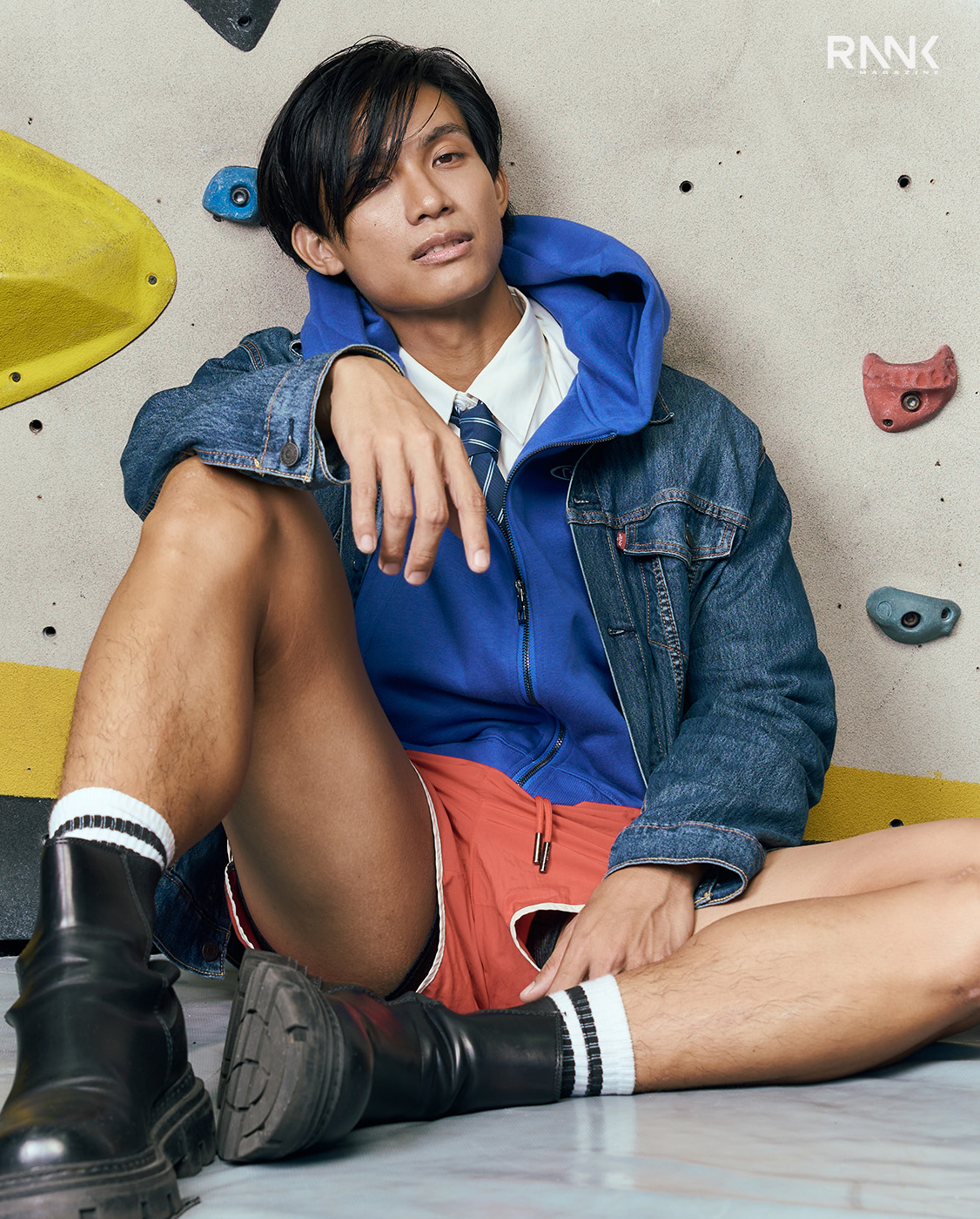
Denim jacket, Levis. Hoodie, white short sleeved button down shirt, both Blanc Nue. Tie, OXGN. Running shorts, Bershka. Shoes, Zara. Socks, H&M. Photographed by Emman Escultor.
The skinny kid his friends had always known was becoming someone else in their eyes, too. Compliments started coming in, followed by questions about what he had been doing, how he was training, and what had changed. Through those conversations, Bon0an began to realize that what started as a personal attempt to become more confident could also be useful to someone else.
By his senior year in college at the Ateneo de Manila University, while taking up business management, he started taking on clients and officially entered the fitness coaching business.
At the time, freelance fitness coaching was still relatively unconventional. There was no proven blueprint for building a career around it, but he believed more people would want to live healthier lives and would need guidance along the way.
Communication became another strength. While working with individual clients, Bonoan found himself doing fitness talks to companies and organizations, bringing what he had learned outside the gym and into other people’s lives.
The teenager trying to feel better about himself has transformed into something much larger. Fitness was no longer simply about changing his body. It has become a way to help other people become healthier and more confident themselves.
“What started as my own journey to become more confident in myself eventually became a career centered on helping other people become healthier and more confident themselves,” Bonoan shared.
Pageantry, however, was never part of the plan.
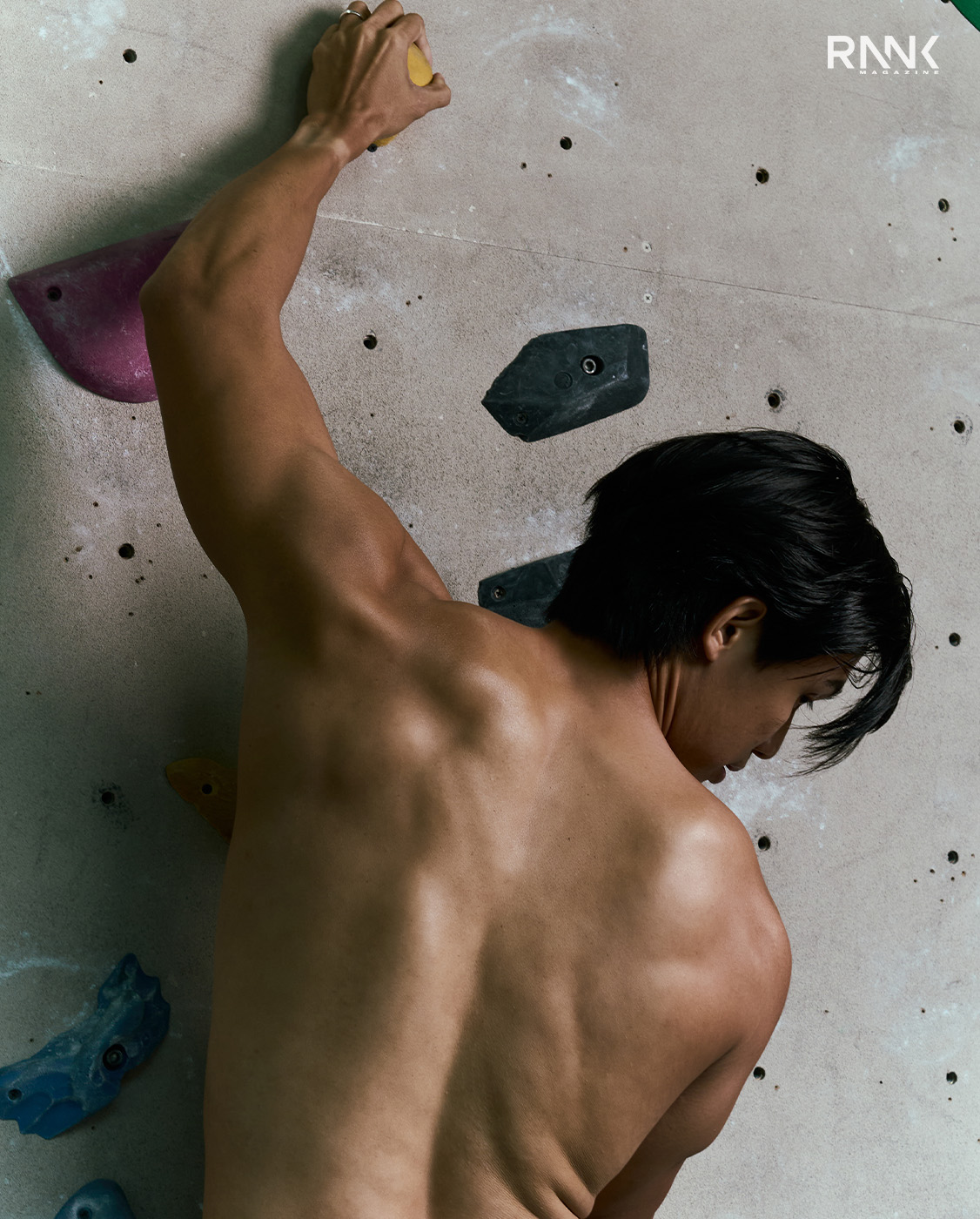
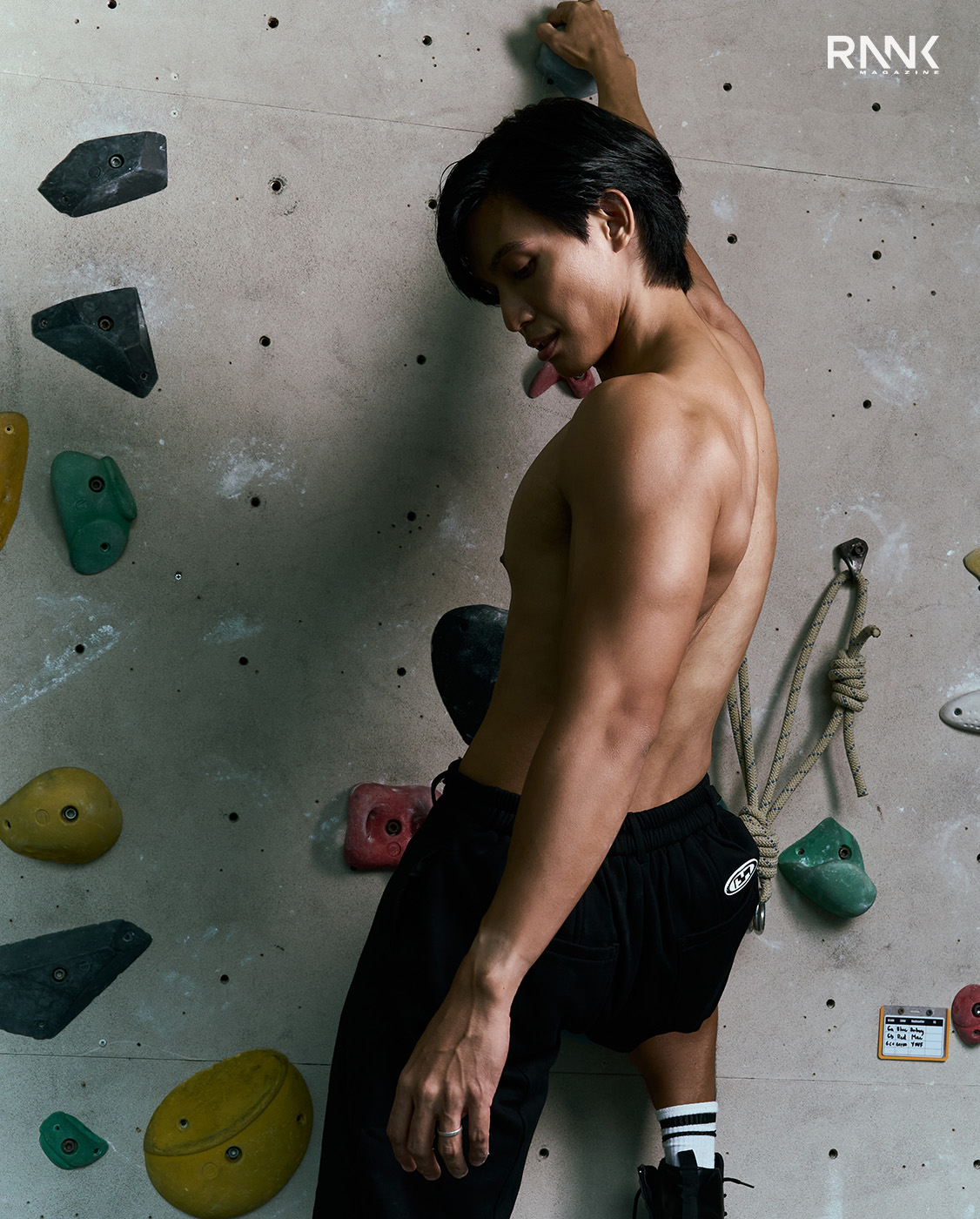
Shorts, Blanc Neu. Socks, H&M. Boots, subject’s own. Photographed by Emman Escultor.
For someone who had grown up struggling with low self-esteem, the idea of entering a male pageant was not exactly an obvious next step.
He would often see posters for BodyCon, the gym’s annual Brand Ambassador search. At the time, his personal advocacy was making fitness more inclusive and welcoming. it provided him a possible way to bring that message to more people.
In 2019, he finally found the courage to apply for the competition. He unexpectedly won the main title.
That opened another door. In 2020, he joined Century Tuna Superbods and became a Top 8 finalist. After that, he thought he was probably finished with what he jokingly called “fitness pageants.”
Then came 2024.
His wife, Julia, had won Gold’s Gym BodyCon the year before, so he encouraged her to join Superbods, just as he has done. Somewhere along the way, he wondered what it would be like if they both became finalists. They did.
The experience also put another possibility in front of him. Some of his batch mates were talking about joining Mister Pilipinas Worldwide, and he started toying with the idea of what a traditional pageant could offer.
BodyCon and Superbods had already given him opportunities to promote his advocacy and connect with people on a larger scale. Perhaps traditional pageantry could give him an even bigger platform. The platform was changing, but the fuel in building it brick by brick remained the same.
Entering traditional pageantry also meant entering a world where his previous experience did not make him an expert.
There were similarities: advocacy promotion, photoshoots, Q&A, and swimsuit rounds. But Bonoan quickly realized that pageantry came with its own technical aspects that he simply was not familiar with. Despite his background in fitness competitions, he felt like a novice all over again. And instead of trying to pretend otherwise, he embraced it.
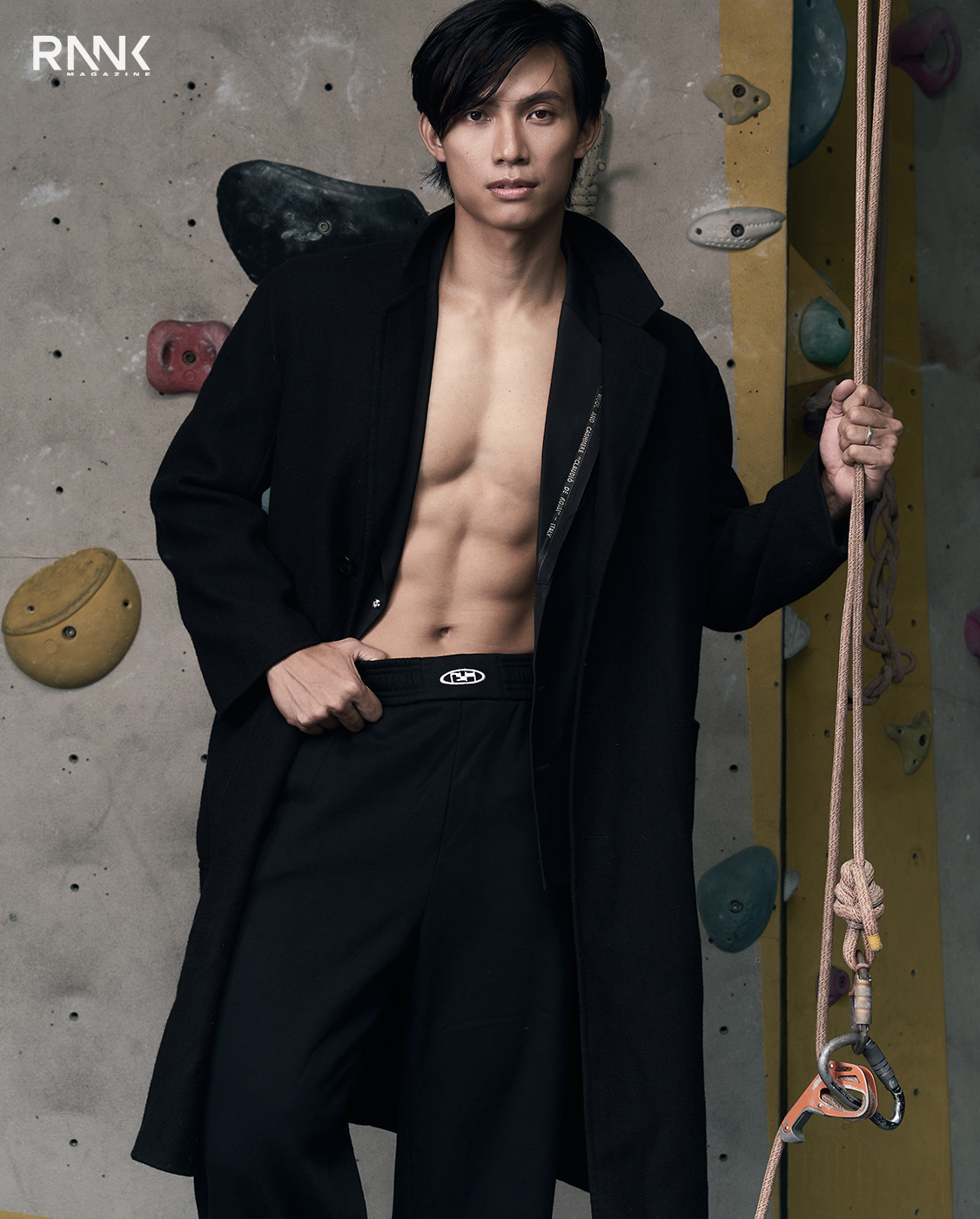
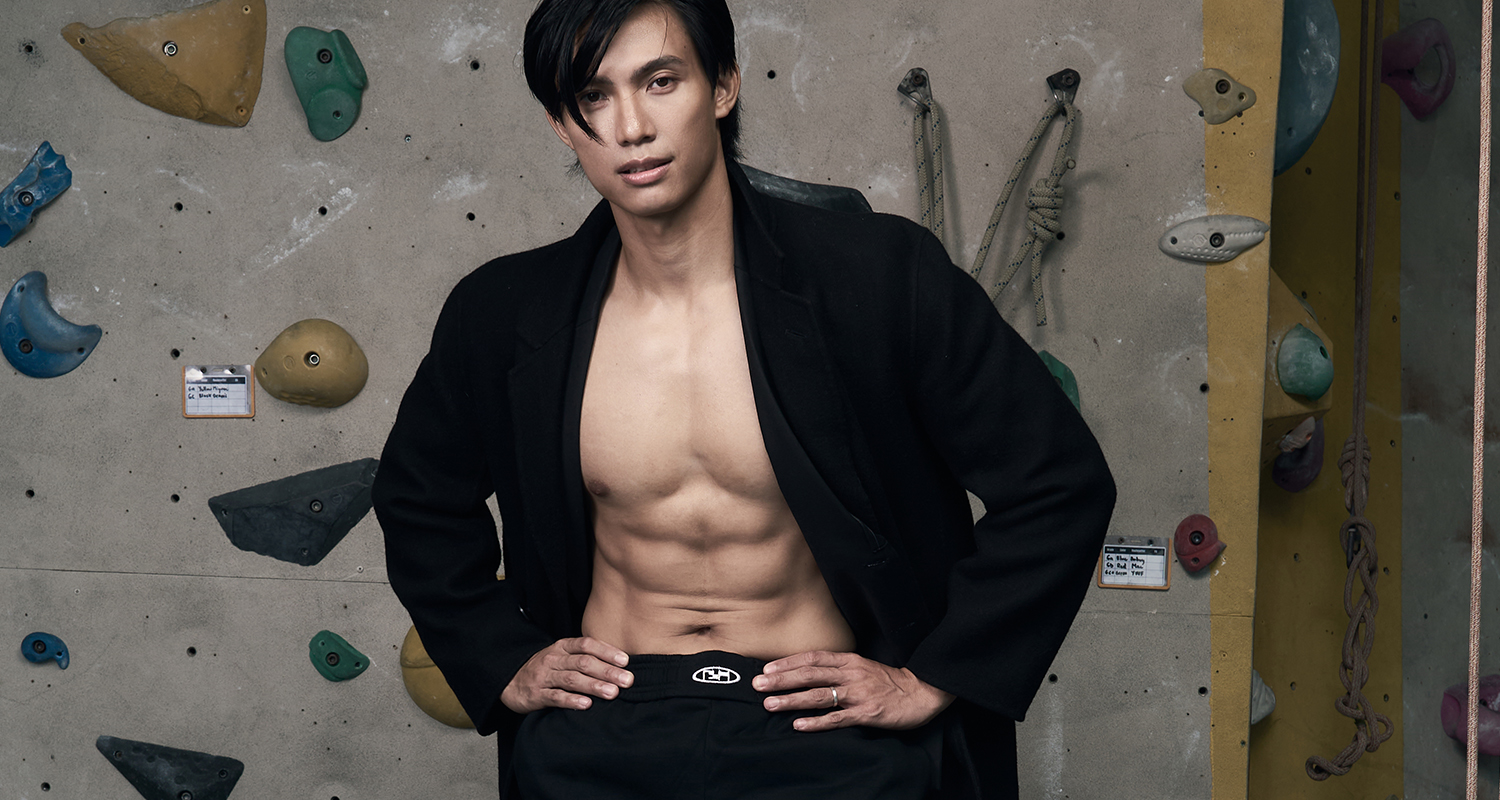
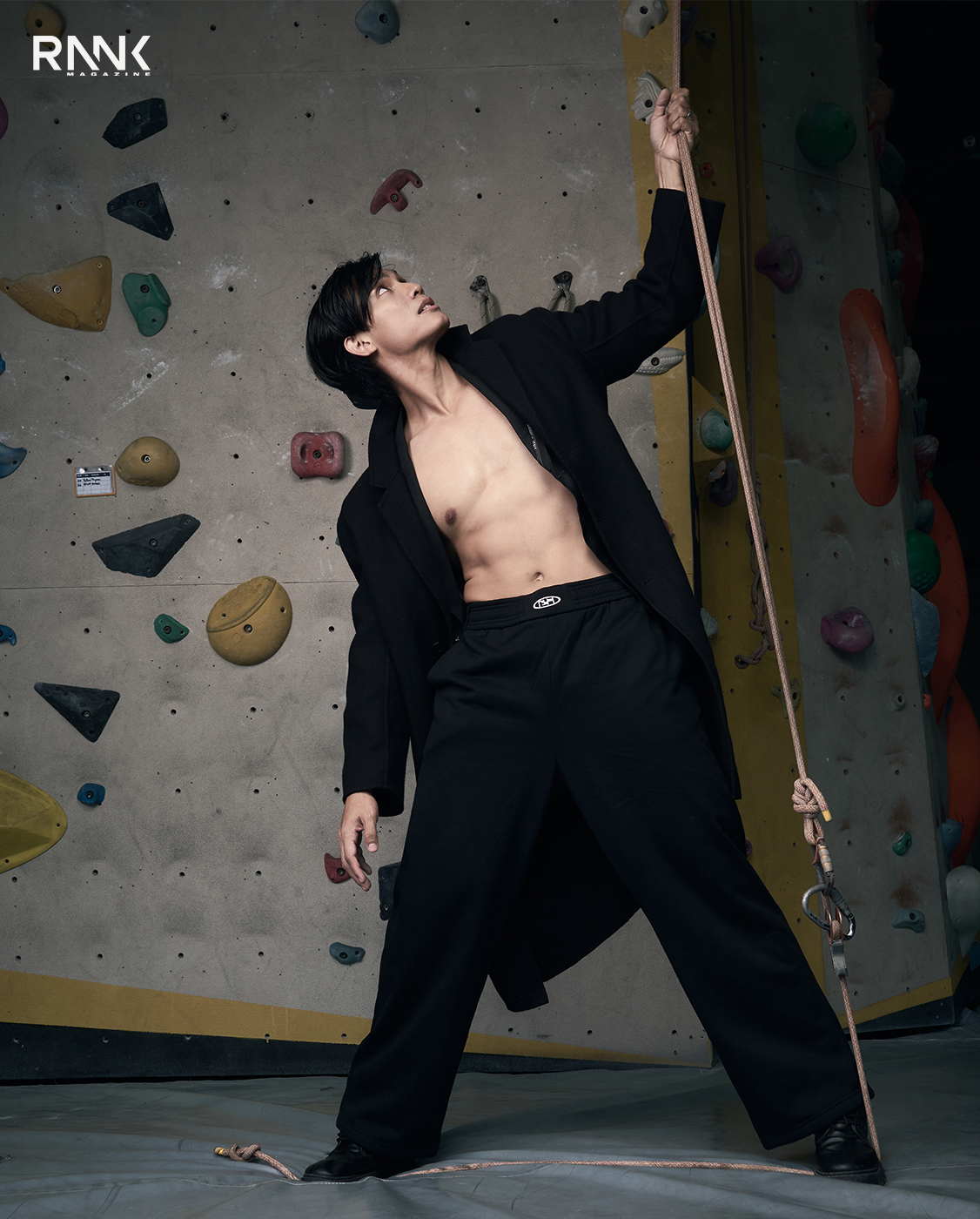
Overcoat, Uniqlo. Blazer (worn underneath), Edwin Tan. Track pants, Blanc Nue. Photographed by Emman Escultor.
He sought out mentors, learned as quickly as he could, and absorbed as much as possible throughout the process. It was another kind of confidence—not the confidence of already knowing what to do, but the confidence to admit that there was still something to learn.
That mindset became important as he moved from Mister Pilipinas Worldwide toward the international stage. Representing the Philippines changed the stakes.
Before, Bonoan was largely presenting the best version of himself. Now, there was a country attached to the sash.
The opportunity excited him, but it also gave his preparation a clearer purpose. He wanted to continue working on himself while communicating that growth to his audience as genuinely as possible.
For him, authenticity became part of the preparation itself. He earnestly wants to represent the Philippines as himself, confident that his words and actions are grounded in who he actually is. The hurdle becomes even bigger when the audience is no longer limited to Filipino men.
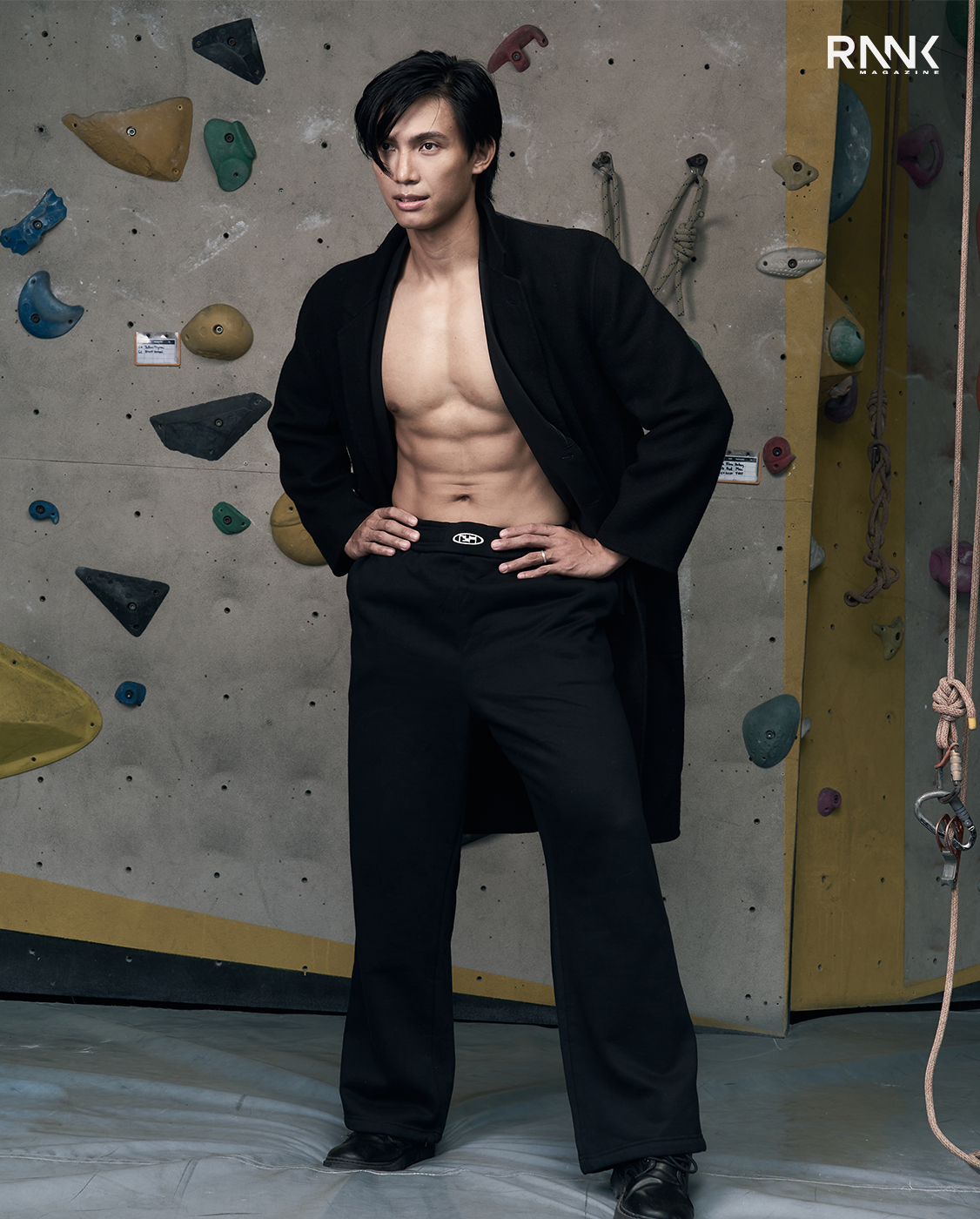
Photographed by Emman Escultor.
If crowned Mister Cosmo International 2026, he wants to be able to connect with men around the world. He knows he cannot speak every language or fully understand every culture, but he believes there are values that do not need translation. The desire to become better. To take care of the people we love. To have the courage to step outside our comfort zones. To use influence to make a positive difference. For Bonoan, these are things that can cross borders.
And perhaps that is also why he no longer sees male pageantry the way he once did.
There was a time when Bonoan did not take male pageantry seriously. In the Philippines, alone, it may not be as prominent as female pageantry, and from the outside, he saw it as an opportunity to “parade eye-candy men.” Being part of the parade changed that perception.
He began seeing pageantry less as a competition over appearance and more as a platform for storytelling and impact. Not everyone will win a crown, but the process itself can still force people outside their comfort zones and push them to improve different parts of their lives. For Bonoan, that character-building aspect matters.
It also illustrates why the title is useful to him now. Not because the crown is what makes him qualified, but because of what it allows him to reach.
That distinction became especially clear through the Bonoan Confidence Academy, which he started before becoming a titleholder. He did not need a crown to believe he could teach confidence.
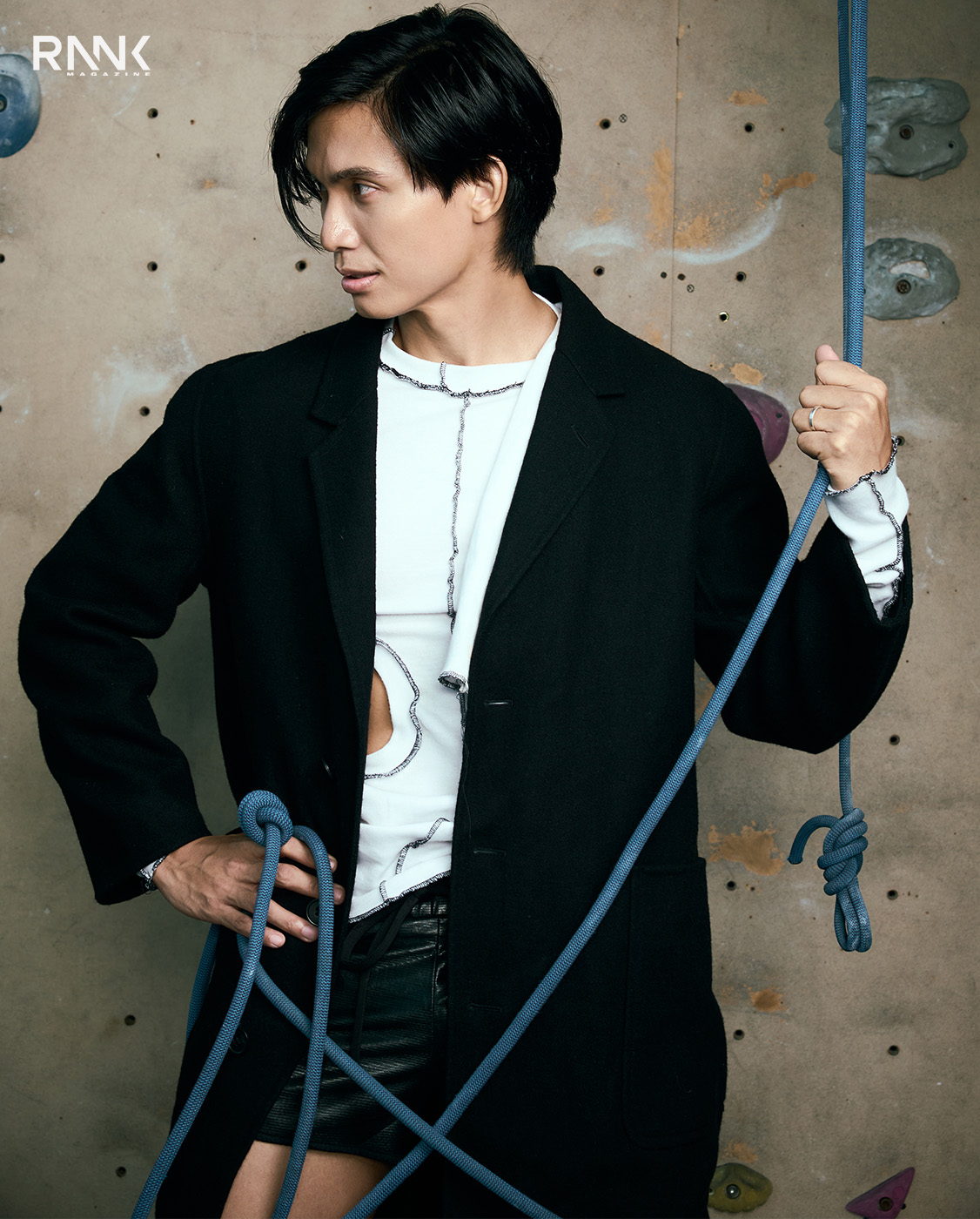
(Right) Cutout top, Archival Proudrace. Overcoat, Zara.
By the time he started the Academy, he already felt comfortable with who he was. He had spent years working on himself and believed he had something valuable to offer. The title simply gave that work a bigger platform. It adds another layer of credibility, opens doors, and allows the Academy and his advocacy to reach a wider audience. But it does not erase the fact that everything came before the crown.
“The crown is an amplifier, the advocacy has always been the foundation,” Bonoan declares.
There is something particularly fitting about that idea considering where his story began. The teenager who once struggled with his appearance eventually built a career around helping people become more confident. He entered competitions, learned how to present himself, and eventually became a titleholder. But none of those things created the person underneath them.
If anything, the crown simply makes more people able to see what was already there.
Of course, being seen also comes with its own pressure.
In pageantry, even the smallest details can feel magnified: how you look, how you speak, how you walk, what you post, and how you answer a question. Preparation can only take you so far when you cannot control how everyone perceives you. For him, part of the process has been accepting that he cannot please everyone. And eventually, he wants to get to the other side of that pressure and remember that he is more than a scorecard.
“I see Mister Cosmo International as a platform to take the vision further, not a finish line,” he says.
Whatever happens in the competition, Bonoan aims to come out of it with a greater ability to influence people and create meaningful change. The next step is to continue growing the Bonoan Confidence Academy and bring its work in confidence, fitness, self-development, and stepping outside comfort zones to an international audience.
There is still the athlete to build, the coach to continue being, the husband and father to remain, and the role model he wants to become beyond a sash.
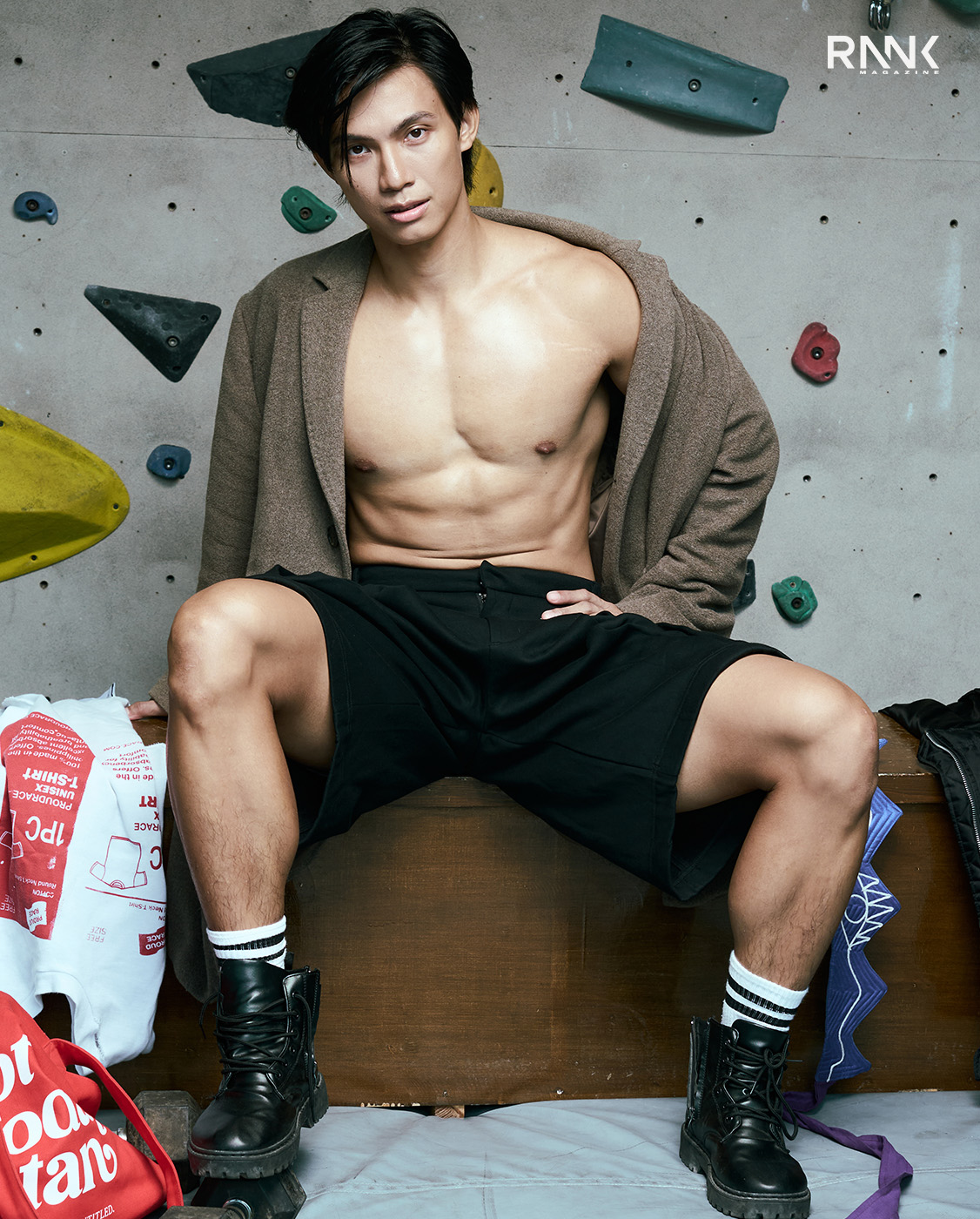
Overcoat, H&M (stylist’s own). Shorts, Blanc Nue. Photographed by Emman Escultor.
Because for Bonoan, being a role model is not something that begins when a title is placed on his name. It is something practiced daily.
If he becomes Mister Cosmo International 2026, he seeks to use the title to open doors that might otherwise be difficult to reach. He visualizes speaking to more young people, working with more organizations, collaborating across countries, and building something that can continue beyond his reign.
And that brings his journey back to where it started. A teenager who once stepped into a gym to feel better about himself. He could not have known that the search for confidence would eventually lead him to coaching, advocacy, competition, and a crown.
But perhaps the crown was never really the destination. It is simply the next opportunity to do something with everything he has built before it.
Because when the sash eventually comes off and the title belongs to someone else he does not want the most important thing left behind to be a photograph, a placement, or a name on a list of titleholders.
He wants the opportunity to have meant something.
And when his reign is over, he does not want people to simply remember the sash. He wants them to remember what he actually did with it.
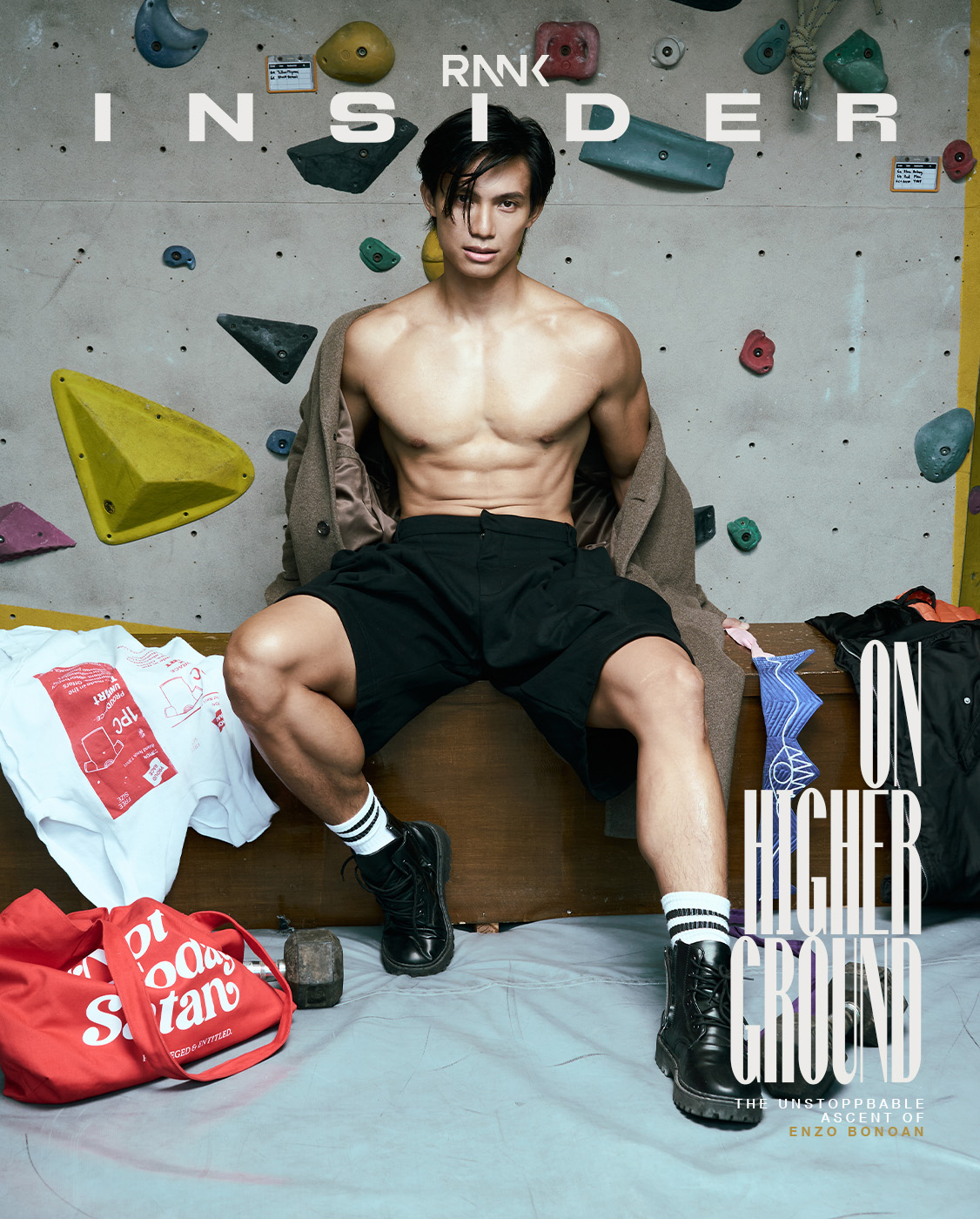
Produced by Rank Magazine
Creative direction, styling, and interview by Leo Balante
Photography by Emman Escultor
Assisted by Errol Reyes
Grooming by Patricia Marcaida
Video coverage: Jhonrichmond Olinar
Shot on location at Power Up Alabang
With acknowledgments to Gretchen Que
Special thanks to Coach Michael Relosa
The Reading List