There is a specific, familiar flavor of humiliation in watching the cultural reflexes of this country play out in real time. We perform our pride exactly on schedule, wrapping ourselves in grand gestures of liberation while our collective subconscious remains completely on its knees. You simply cannot claim to be a liberated people when you are still fiercely ready to worship the next random Western accent that walks through NAIA arrivals, only to act shocked when that same accent speaks over you.
The ongoing controversy and the quick all-too-gratifying downfall of Filipino-American pageant titleholders Brandon Espiritu and Jether Palomo, has moved past simple Internet drama into a full-blown cultural mirror where the people’s online consciousness is currently vibrating with a collective, white-hot fury over two men, both failed to make a significant mark on the international stages they were anointed to represent the country for, but returned to the country still amassing brand deals, businesses, and army of online followers to continue their “reign” for simply wearing that prized sash of being a Filipino pageant titleholder.
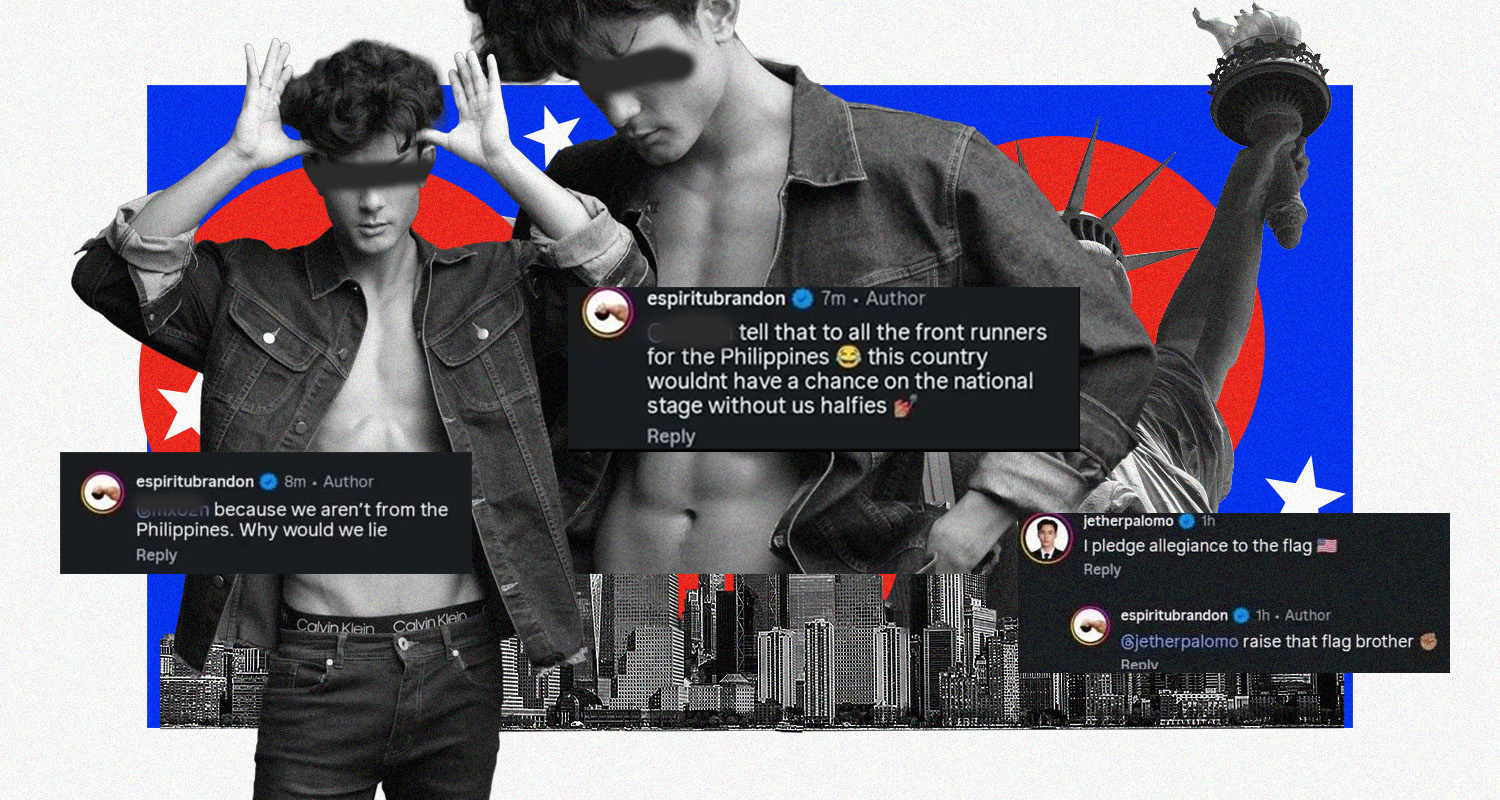
The details are as predictable as they are exhausting with a deleted social media reel, a silly online challenge where they were asked to sing native songs where they came from that quickly revealed their choices to sing anything but Lupang Hinirang, or that resembles their Filipino identity. Espiritu sang a tune that was a nod to Guam while Palomo, a pure Filipino, sang “Happy birthday”, in reverence to the flag he freely shared he “pledges allegiance to.”
This was then followed by a defensive digital paper trail from the two, with hopes that they can get away with it albeit jokingly or at the least, snarkily. The apex of this audacity was captured in a single, unguarded comment from then waiter and struggling fitness trainer to Philippines-based model and entrepreneur, Espiritu, claiming that the Philippines “wouldn’t have a chance on the national stage without us ‘halfies.’”
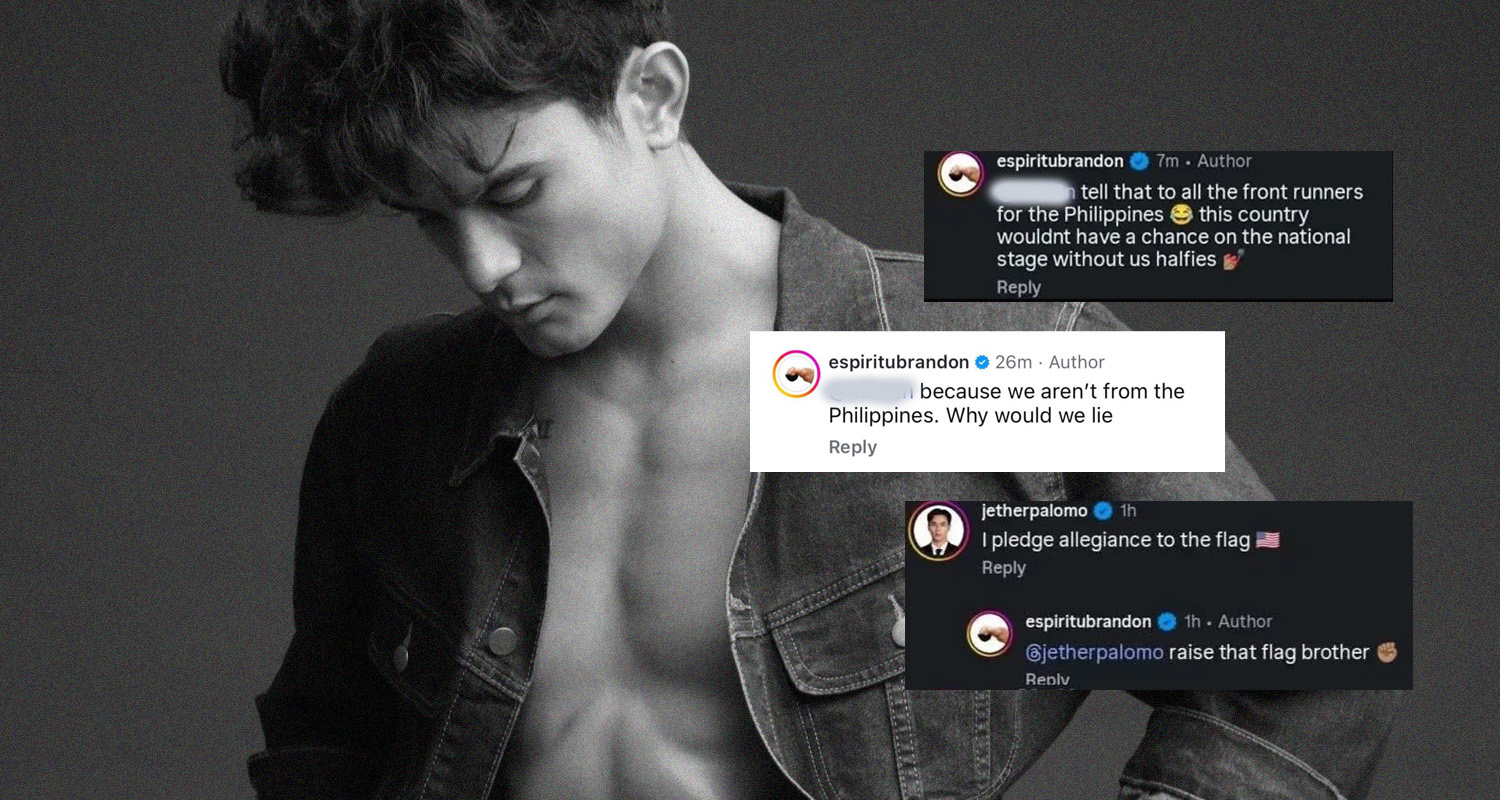
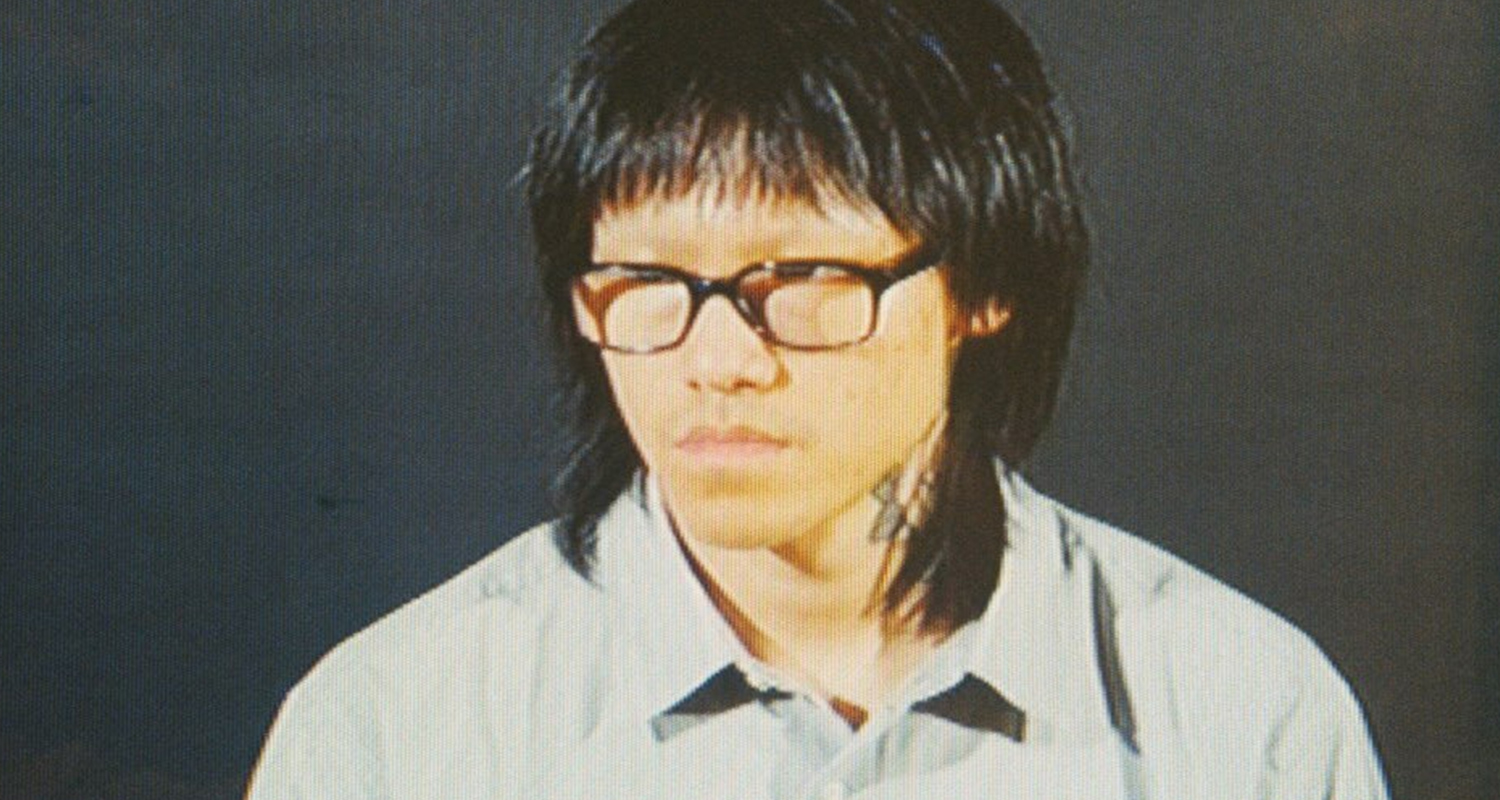
With photograph by Rxandy Capinpin for Rank Magazine.
The backlash was swift and unforgiving. Like a house of cards crumbling with one blow, Espiritu’s lean reputation and growing small empire of businesses he was a part of and was once affiliated with, closed doors on him. (The validity of some of these businesses’ official statements, with some stating they were just Espiritu hiding under ChatGPT apologies, remains unfounded but should be revealed soon).
The string of snarky comments from Espiritu were not only misinformed but was a ringing disservice to the long legacy of titleholders who stood their grounds on the international pageant circuits, both pure-bred Filipinos and those with mixed ethnic backgrounds and identities, and proudly waved the Philippine flag on and off their respective competitions. Worse, not only did they anger and insult a pageant-loving country. But one that the two have openly admitted to have changed the course of their “struggling” lives before wearing that sash and being backed by the Filipinos they are not proud to compete for, contrary to what their apology statements now say.
Everyone is acting deeply shocked by the sudden, ugly flash of diasporic entitlement, but honestly, why are we surprised?
It is easy to stay mad at these Pinoy halfies for looking down on us. But soon, we will forget about them and just let nature run its course. In fact, it is only a matter of time when the two will be thrown out and asked to find their footing elsewhere, the way bigger names with “lesser” offenses were quickly shunned, unable to recover, and labeled persona non grata. We are wasting our rage on the symptom while ignoring the disease. We need to be deeply, thoroughly disgusted with our own habit of turning basic foreign existence into a milestone we must reward.
We built the pedestals they are standing on. We are the ones who took their absolute bare minimums and treated them like a spiritual awakening. And now, we ask them, “What are you without the Philippine flag that you carry?”
Let’s look at the actual math of this cultural transaction. Back where they came from, these men are aggressively ordinary. They are invisible. Espiritu shared stories of him taking on jobs he didn’t like because of opportunities he was never given back where he came from. Without the immense weight and loyalty of the Philippine sash, just like all of us, they are just everyday citizens navigating the background of the Global North. But the exact second they touch down in Manila, they get treated like royalty.
Why? Because they speak fluent English with a Western accent and possess the genetic aesthetic of a colonized preference. It’s automatic. In this country, you don’t even need to be brilliant, deeply cultured, or particularly skilled. You just need to say “Yeah, literally,” with a slight vocal fry, and suddenly we are throwing brands, platforms, gazes, and unearned reverence at your feet.
When you treat someone like a literal god for simply achieving the baseline minimum of human existence, you teach them that they are inherently superior to you. And surprise, surprise—they believe it. They lean into the hierarchy we built for them and they will start viewing this country not as a motherland to respect, but as an easy, low-stakes playground for quick social media clout, online views, cheap modeling gigs, and unearned validation. They think they are better than us because we have spent decades acting like they are.
Liberation cannot be negotiated through the master’s vocabulary, nor can it be celebrated with a flag that we willingly let transient opportunists treat as a passport accessory.
As we mark Araw ng Kalayaan, let us confront the uncomfortable reality that a nation cannot claim sovereignty while its cultural institutions remain subservient to the bare minimums of the Global North. We did not survive centuries of literal subjection only to spend our independence funding the narcissism and egos of these diaspora gods who treat the motherland as a low-stakes safety net for a quick buck, and unearned validation.
True decolonization requires a radical, militant refusal to accept the crumbs of Western proximity as excellence. We loaned them a flag; we did not surrender our self-worth. If their allegiance belongs to a different red and blue, let them find a stage that does not rely on our collective labor nor platforms, and our deep-seated systemic trauma to keep them relevant.
True independence begins when we tear down the very pedestals we built for those who view our admiration as their birthright, dismantle the psychological pipelines of our own subjugation, and finally demand a revolutionary standard of excellence that honors our own identity, our own intellect, and our own people.
Happy Independence Day to a nation that needs to start acting like it. The era of settling for colonized crumbs is over.
With additional text by Leo Balante
The Reading List
September 14, 2026