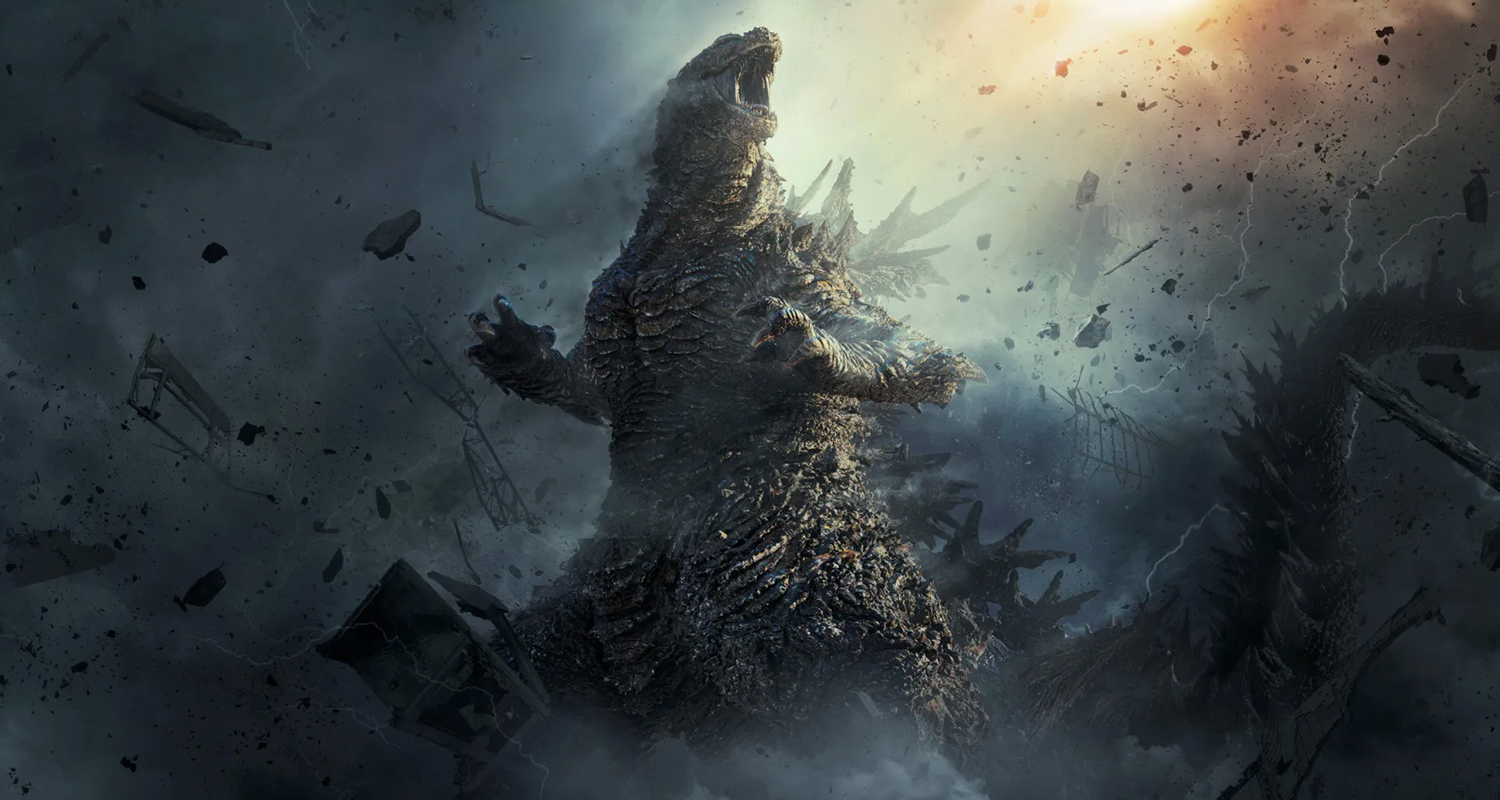
Godzilla, the monster, was first introduced in the 1954 film Gojira directed by Ishiro Honda. Godzilla may have been a product of special effects but was even more known to have been greatly inspired by Japan’s experiences throughout the Second World War. This is heavily characterized by the bombing of Hiroshima on the 6th August 1945 and Nagasaki on the 9th August 1945. Godzilla was created based on the destruction brought by these attacks and the lasting impact and deterioration this brought to the human psyche long after the nuclear weapons have been dropped.
The original Godzilla was created as a monster representing the destruction caused by mankind. Over the years, Godzilla has seen changes due to different directors, its stories and interpretations. This means that Godzilla (King of the Monsters) has now embodied many different meanings.
One of the most interesting aspects of Godzilla is the fact that different directors have portrayed Godzilla in completely distinct ways. While Toho has continued to use Godzilla to reflect on Japanese history, another version was brought to life by Hollywood and Legendary Pictures.
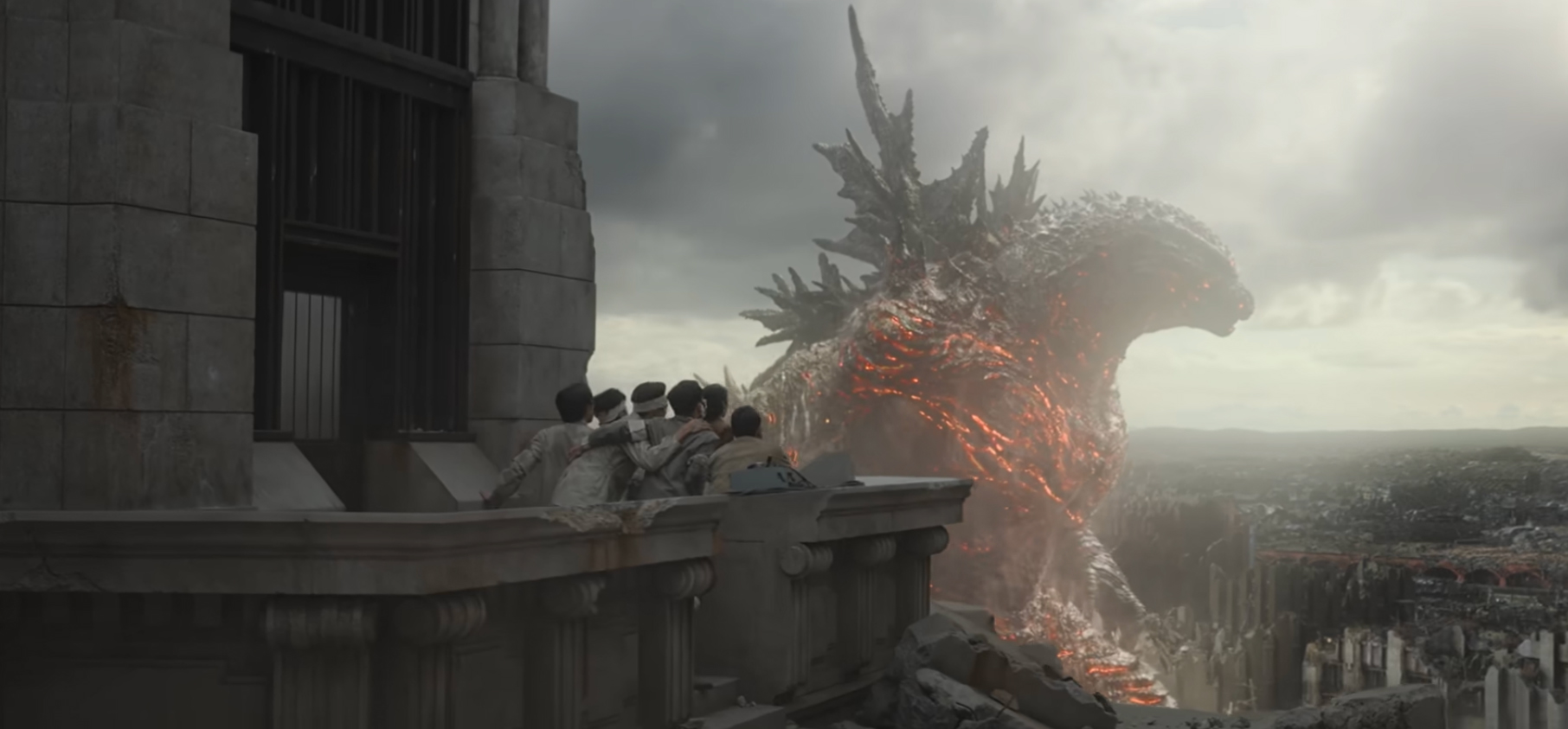
Godzilla Minus Zero. TOHO/GKids Films. YouTube.
Beginning with Godzilla in 2014, long after Hollywood first attempted to retell the story in a 1998 Roland Emmerich interpretation, the studio introduced its own cinematic universe, reimagining the King of the Monsters within a world inhabited by other ancient creatures. Rather than simply revisiting Godzilla’s origins, Legendary’s films expand his mythology, presenting him as a force that exists beyond humanity’s understanding and, at times, as a protector of the natural order. In this version, Godzilla is viewed not as a force of nature that brings disaster but as an ancient creature with its own purpose.
Then came Toho’s Minus realm. From its recent global release earlier this month, Godzilla Minus Zero is a direct sequel to Godzilla Minus One (2023) off its highly-praised and groundbreaking cinematic run, under the direction of Takashi Yamazaki. This movie takes place two years after the events of its predecessor. It takes us back to 1949, where Japan is still struggling to recover from the devastation of war, compounded even greatly by another catastrophic event, the reign of terror of an unexplainable monster.
A new creature is introduced to us in this Minus Zero, which will eventually develop into King Ghidorah, a three-headed monster that poses great destruction, long after Godzilla’s supposed demise. Japan is once again in danger of further decay, and the characters we have come to know are faced with another seemingly inescapable tragedy.
Widely praised for its prolific storytelling, the Godzilla Minus versions show us a terrible creature that incites fear and trauma to humans, but what it inflicts is greater pain from deep unhealed wounds left by the inanities of war.
In Godzilla Minus Zero, neither Godzilla nor Ghidorah is necessarily seen as the main character. It is the humans who take center stage, navigating and trying to survive in a world where creatures that defy scientific explanations and logic exist. The film places greater emphasis on the people who have to live with the monsters’ hovering presence, their losses, and the consequences of their actions.
Professor Kanji Murakami, a biologist whose family was killed during the atomic bomb in Hiroshima was so driven by grief that he initially wants to weaponize Godzilla to take revenge against the United States before joining the effort to stop Ghidorah. The movie gives us a real insight into the feelings people had after losing everything following a life-altering tragic event.
In the end, we see how Godzilla is used by humans against Ghidorah. While this may not be a completely new concept, Godzilla is seen less like a creature and more like a weapon. This is especially interesting to look at, considering the humans are still struggling with the consequences of war. This, in many ways, reflects how humans confront ghosts of their past and try to use it to march forward.
While Toho looks back on Godzilla using real-life issues in Japan, Legendary Pictures have a different approach in weaving the character to create their “MonsterVerse”.
After its introduction in 2014, the cinematic universe has grown over the years. Kong: Skull Island (2017), Godzilla: King of the Monsters (2019), Godzilla vs. Kong (2021) and Godzilla x Kong: The New Empire (2024) all followed suit. Unlike the Minus movies, this version has set its sights on building a world populated by ancient Titans. This means banking CGI-heavy spectacle, special effects, and battles between creatures unknown to humans.
What makes Legendary’s Godzilla such an ambitious take on the classic, while some finding it more silly than entertaining, is that the Titans aren’t seen as monsters or chaotic creatures. Each of them has been given a chance to live. They are part of the natural balance of the world, and Godzilla is there to keep them in check.
This creates a different narrative rather than Godzilla being a chaotic force of nature set to wreak havoc to mankind. It views it as a creature capable of making choices, not fighting for or against humans, but for itself and its grander purpose to bring balance to the world.
Perhaps that is what makes Godzilla such an enduring character (for better or for worse): its ability to carry different meanings across generations and cinematic interpretations. Whether the monster is portrayed as a symbol of nuclear devastation, a manifestation of human trauma, or an ancient creature maintaining the balance of nature, the King of the Monsters remains a character whose purpose continues to evolve.
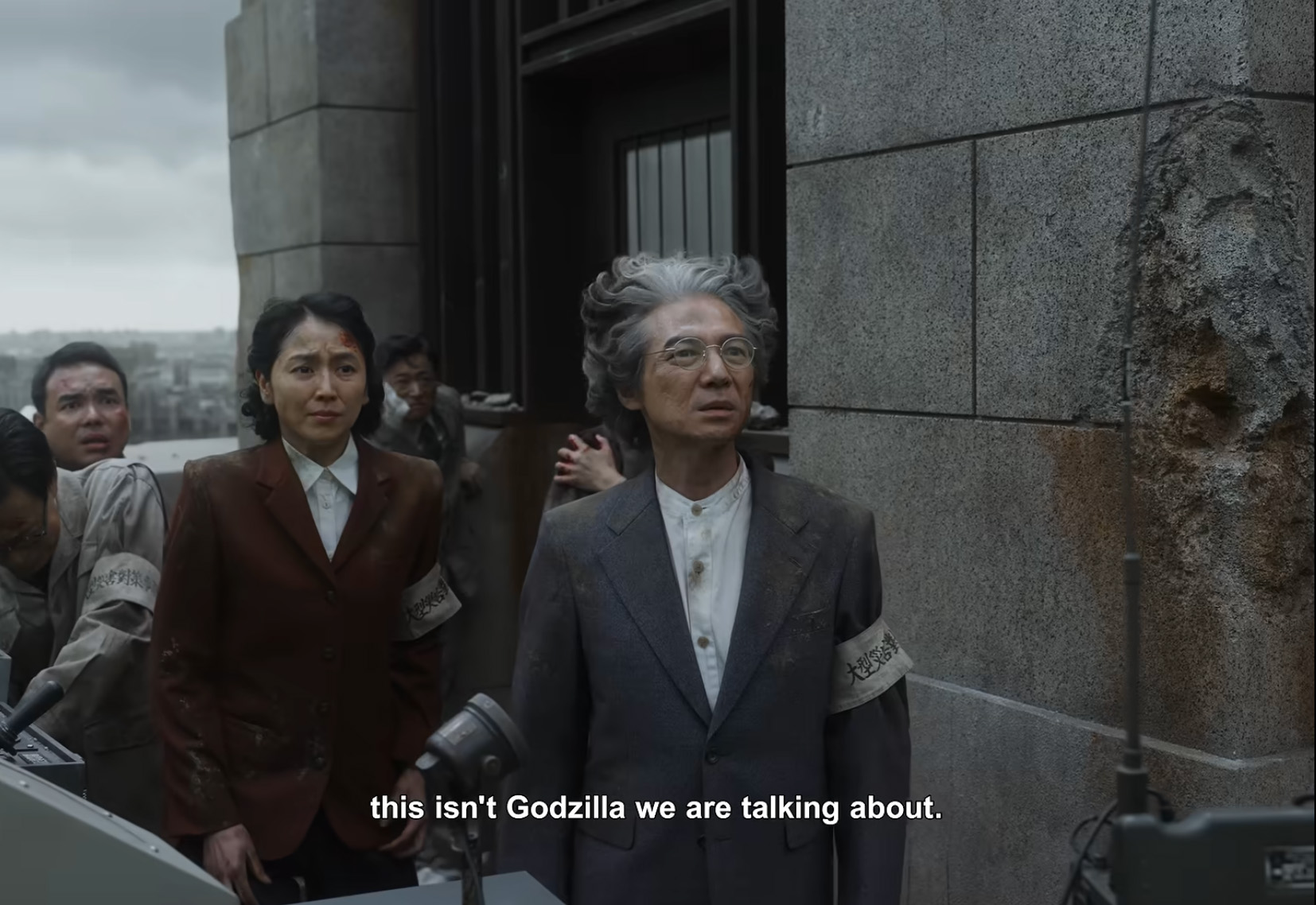
Godzilla Minus Zero. TOHO/GKids Films. YouTube.
The Minus films remind audiences of human folly and the consequences of war, and manmade destruction. Through the struggles of characters in its periphery, Godzilla becomes more than a creature capable of destroying cities. It becomes a reflection of the emotions, fears, and sacrifices that define the human experience.
Legendary’s MonsterVerse expands Godzilla beyond humanity’s perspective, presenting a world where ancient creatures exist independently of human understanding. Its battles, presence, and purpose do not simply revolve around humanity, but about preserving the natural order of the world itself, something that may be far from our capacity to comprehend.
Both versions give us a different view on Godzilla, and this is what makes the character so interesting. Seen in many different ways, it can be as polarizing as it can be equally appreciated and thoroughly enjoyed by its audience.
And after decades of cinematic history, Godzilla continues to remind us that sometimes, the most interesting thing about a monster is not simply what it destroys, but what it represents.
The Reading List