A land remains peaceful, until a conflict of interest arrives.
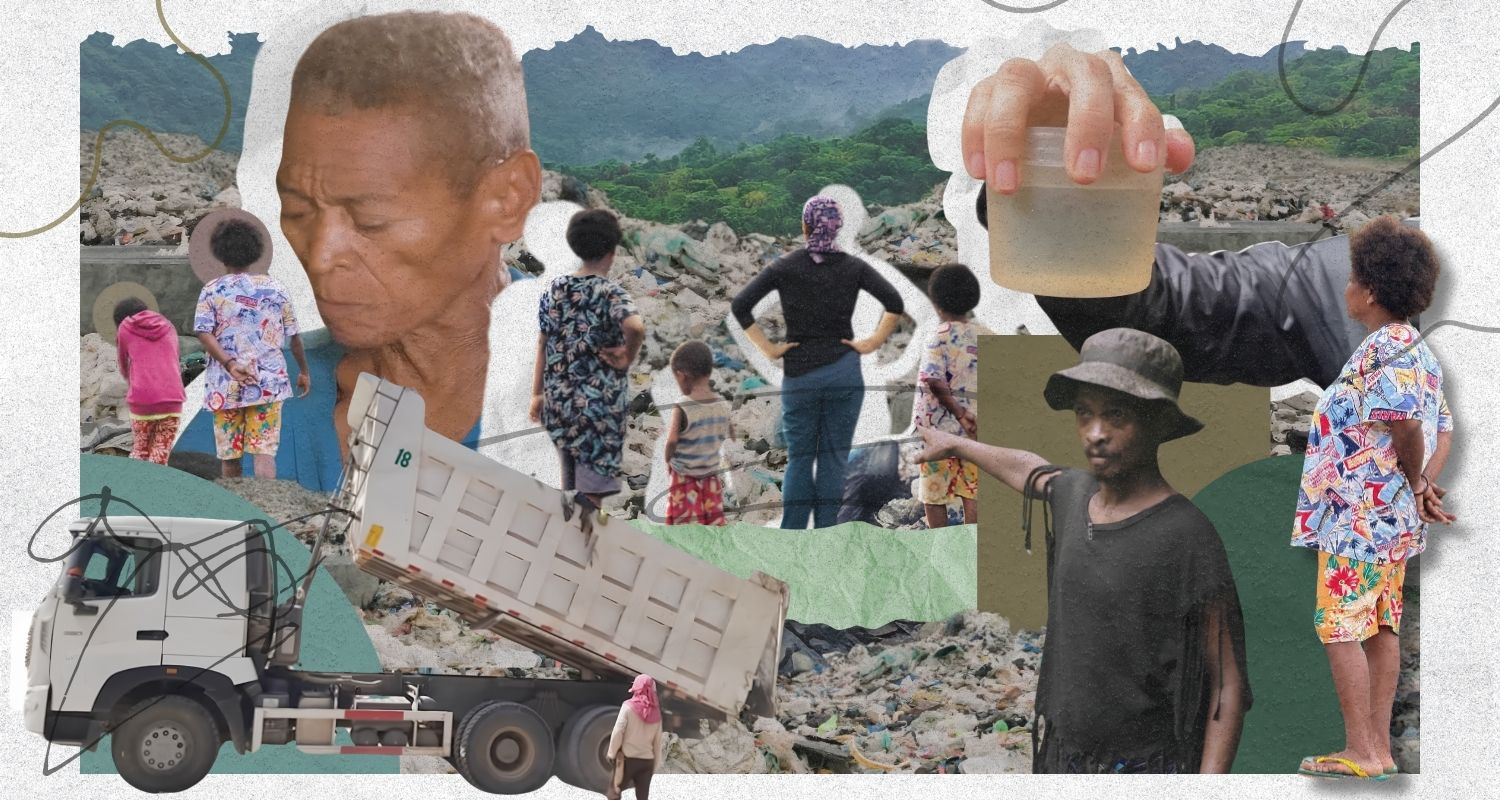
The forest has always been the Aeta community’s pharmacy, kitchen, and cathedral—a sacred ancestral domain where survival is profoundly interconnected with the rhythm of the earth. Today, because of a few leaders in an air-conditioned municipal hall, they stare at that same forest and see a giant mountain of urban waste.
Kara David documents the dreadful situation of indigenous people in a compelling documentary, “Ibinasurang Paraiso,” where grim images of municipal trucks drove deep into the woods to dump city garbage in their residential area. This depicts a distinct kind of displacement for the Aeta community.
Usually, civilians are reported to be forced off their land by chaos or the villainous efforts of huge mining companies. Yet here, the displacement is done sluggishly by the government. The Local Government Unit (LGU) treated sacred indigenous land like a spacious trash can for progressive cities. They coerced the Aeta community to reside next to toxic waste from a modern world they did not even benefit from.
Art by Jhonrichmond Olinar.
Leadership in decay
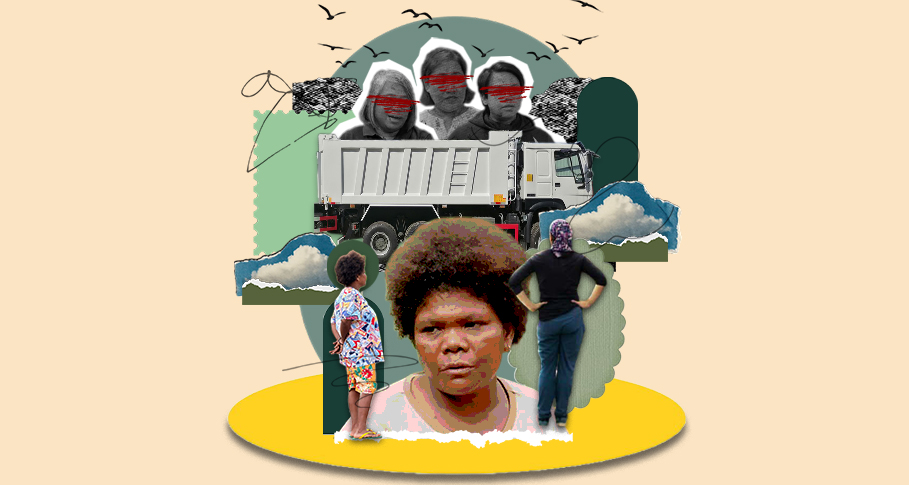
This ecological tragedy serves as an infuriating portrait he local government officials and engineers failing duties they swore an oath to office for. We see Marian Del Castillo, Mary Grace L. Molina, and Atty. Serafin Michaelle Alzate, all paid to have intelligent decisions to safeguard public health and adhere to environmental laws betray the people they are paid to protect.
Instead, they exercised their power to start disturbances and ruin the fate of a community that had no say in the matter. They faced the camera without shame, standing by their choice to establish a dumpsite in a protected forest. It only illustrates a sense of impunity, and apparent lack of empathy in this grave issue—only driven by their own lapse in judgement and misguided beliefs.
The irony is, these “educated” people of power who have the skills to make the forest more habitable, looked at an exquisite forest and saw nothing but a cheap, unoccupied hole where they could throw away plastic.
When this kind of issue occurs, leaders must step up and face it with transparency and accountability. When ordinary people are simply trying to make ends meet, or even exist, it’s the duty of the leaders to make a difference and not another dilemma.
Are these the leaders that we should look up to? What happened to their duty to serve and protect the people? As is expected, this failure of leadership, according to the three, directly led to the enormous financial mess that they are now desperately attempting to escape.
A band-aid solution to a community in ruins
In the documentary, the community of Aetas were told not to worry about what the LGU has done on their land. Reports also disclose that the site became a dumping ground for all municipal waste accumulated during the pandemic. This included hazardous hospital waste that can directly put the community’s health and safety in danger.
In response to complaints raised, the LGU official claimed that they would construct a barrier wall so the garbage juice would not seep through. This statement only demonstrates that they refuse to acknowledge their blunder, treating the destruction of ancestral land as a minor misstep rather than a major catastrophic failure.
The Aetas are constantly confronted by judgment and discrimination, treated as “others” when they try to make a living in the city and this, alarmingly, is something they have learned to live with. But when it comes to their own plight in their own place of residence, the LGUs unsurprisingly turn a deaf ear.
The real cost of ignorance and apathy
The ultimate irony—and the absolute peak of institutional failure, is what, according to the public officials in question, is the current ₱78 million dilemma. Now pushed by environmental laws to eliminate the waste and rehabilitate the forest they ruined, the same officials are scrambling to find funds for a problem they masterminded.
Destroying an entire, perfectly safe ecosystem only took a few signatures, fixing it requires millions of pesos they now claim to officially run out of. Nature does not accept bureaucratic excuses. Ecosystems cannot be restored with the same ease they were destroyed. They are fully aware that they can no longer remove the garbage from the site; hence, their immediate solution is to simply cover the mountain of trash with soil. The audacity to claim a solution as if they weren’t the very ones who tampered with the land in the first place is staggering.
“Ibinasurang Paraiso” serves as a frightening mirror of our broken system and the deeply inadequate people running and benefiting from it. When we allow bureaucrats to waste sacred spaces, we compromise our shared humanity.
Ancestral lands are not landfills for a rotting political system. It is time to demand strict accountability for this catastrophic failure, as the ₱78 million price tag will eventually come out of our own pockets as taxpayers, while the Aeta community continues to pay the ultimate price of the ineptitude of a few with their land. Until we dismantle these corrupt interests, no land, and no community, can ever truly remain peaceful.
Watch the full documentary here:
The Reading List